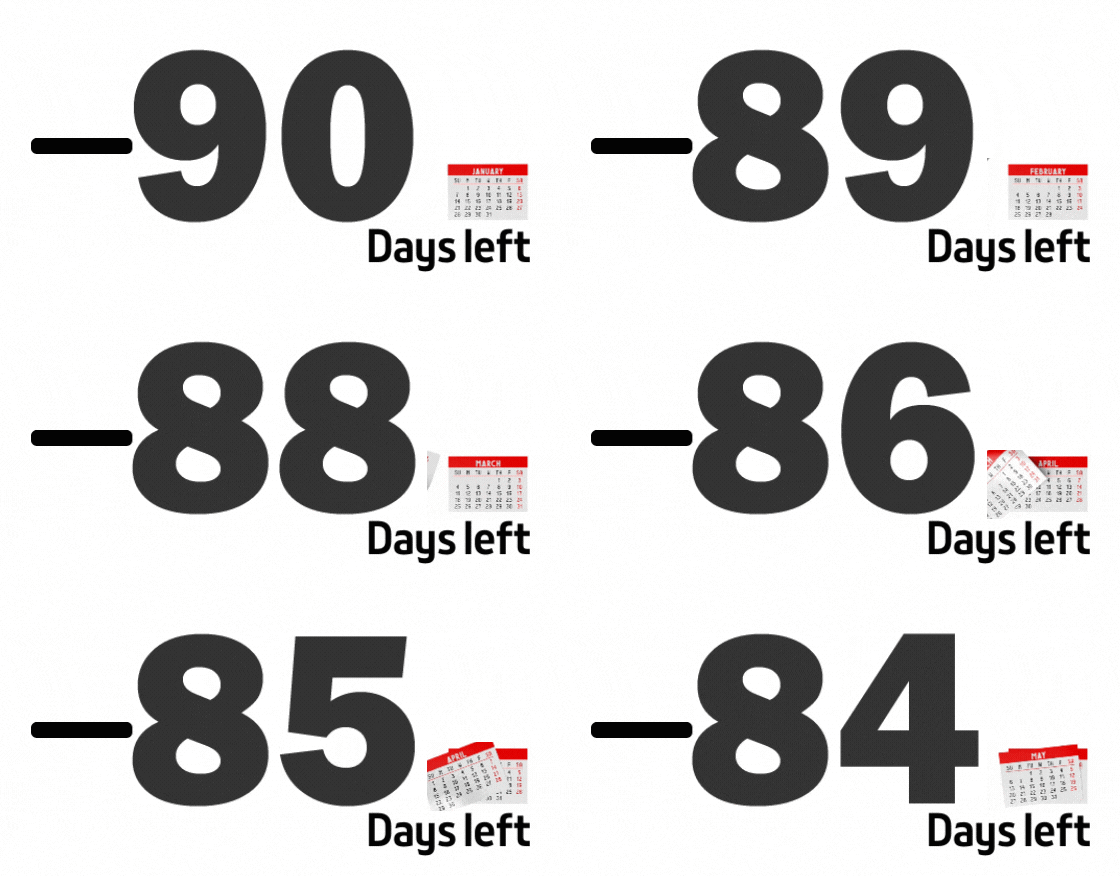
Non-EU visitors can stay in the Schengen countries for maximum 90 days any 180 day period, but the calculation is not easy!
The Schengen area includes 26 EU countries:
𝖠𝗎𝗌𝗍𝗋𝗂𝖺, 𝖡𝖾𝗅𝗀𝗂𝗎𝗆, Croatia, 𝖢𝗓𝖾𝖼𝗁 𝖱𝖾𝗉𝗎𝖻𝗅𝗂𝖼, 𝖣𝖾𝗇𝗆𝖺𝗋𝗄, 𝖤𝗌𝗍𝗈𝗇𝗂𝖺, 𝖥𝗂𝗇𝗅𝖺𝗇𝖽, 𝖥𝗋𝖺𝗇𝖼𝖾, 𝖦𝖾𝗋𝗆𝖺𝗇𝗒, 𝖦𝗋𝖾𝖾𝖼𝖾, 𝖧𝗎𝗇𝗀𝖺𝗋𝗒, 𝖨𝖼𝖾𝗅𝖺𝗇𝖽, 𝖨𝗍𝖺𝗅𝗒, 𝖫𝖺𝗍𝗏𝗂𝖺, 𝖫𝗂𝖾𝖼𝗁𝗍𝖾𝗇𝗌𝗍𝖾𝗂𝗇, 𝖫𝗂𝗍𝗁𝗎𝖺𝗇𝗂𝖺, 𝖫𝗎𝗑𝖾𝗆𝖻𝗈𝗎𝗋𝗀, 𝖬𝖺𝗅𝗍𝖺, 𝖭𝖾𝗍𝗁𝖾𝗋𝗅𝖺𝗇𝖽𝗌, 𝖭𝗈𝗋𝗐𝖺𝗒, 𝖯𝗈𝗅𝖺𝗇𝖽, 𝖯𝗈𝗋𝗍𝗎𝗀𝖺𝗅, 𝖲𝗅𝗈𝗏𝖺𝗄𝗂𝖺, 𝖲𝗅𝗈𝗏𝖾𝗇𝗂𝖺, 𝖲𝗉𝖺𝗂𝗇, 𝖲𝗐𝖾𝖽𝖾𝗇, 𝖺𝗇𝖽 𝖲𝗐𝗂𝗍𝗓𝖾𝗋𝗅𝖺𝗇𝖽.

These countries have signed an agreement that allows their citizens to travel freely within their borders.
Do you need a visa to travel to Schengen? you can check it here: https://ec.europa.eu/home-affairs/system/files/2020-09/visa_lists_en.pdf
Also, below you can scan an interactive map with a full list of countries whose citizens must have a visa when crossing the Schengen external borders and a list of countries whose citizens are exempt from that requirement

Third-country nationals (e.g person who is not a citizen of the European Union and Iceland, Norway, Liechstein and Switzerland), irrespective of being visa required or exempt — who intend to travel to the Schengen area for a short trip, business or tourism, can stay for maximum 90 days in any 180-day period.
Date of entry: shall be considered as the first day of stay on the territory of the Schengen Member State
Date of exit: shall be considered as the last day of stay in the Schengen Area.
This rule applies only to short-term visitora. Periods of stay authorised under a residence permit or a long-stay visa shall not be taken into account in the calculation of the duration of stay on the territory of the Member States.
Reference to “any 180-day period” implies the application of a “moving” 180-day reference period, looking backwards at each day of the stay (be it at the entry or at the day of an actual check), into the last 180-day period, in order to verify if the 90 days / 180-day requirement continues to be fulfilled.
Calculation is often not easy and the EU has created an online CALCULATOR
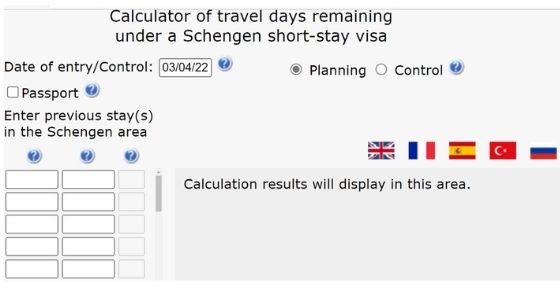
which can be used by any traveller. More detailed guidelines can be found in the USER MANUAL FOR USING THE SCHENGEN CALCULATOR.
A non-EU national who stays in the Schengen area beyond 90 days (without a residence permit or long-stay visa) is illegally present, which can result in a re-entry ban to the Schengen area. Working in the Schengen area without a work permit is also illegal (even if less than 90 days) and can likewise result in a re-entry ban to the Schengen area.
Depending on each Member State, administrative and monetary penalties may also apply.
The Entry/Exit System (EES) will be operational in 2022 (starting date to be confirmed). It is an automated IT system for registering travellers from third-countries, both short-stay visa holders and visa exempt travellers, each time they cross an EU external border.
The system will register the person’s name, type of the travel document, biometric data (fingerprints and captured facial images) and the date and place of entry and exit.
EES will replace the current system of manual stamping of passports, which does not allow a systematic detection of over-stayers (travellers who have exceeded the maximum duration of their authorised stay).
EES will contribute to preventing irregular migration also identifying more efficiently over-stayers as well as cases of document and identity fraud.
See Entry-Exit System (europa.eu)

Attorney at law.
One of the leading corporate immigration lawyers in Italy. Admitted to the Milan Bar Association (1988) and to the Taipei Bar Association (2016), a member of the American Immigration Lawyers Association (AILA) and an accredited partner of Invest in Tuscany.
Related posts: